





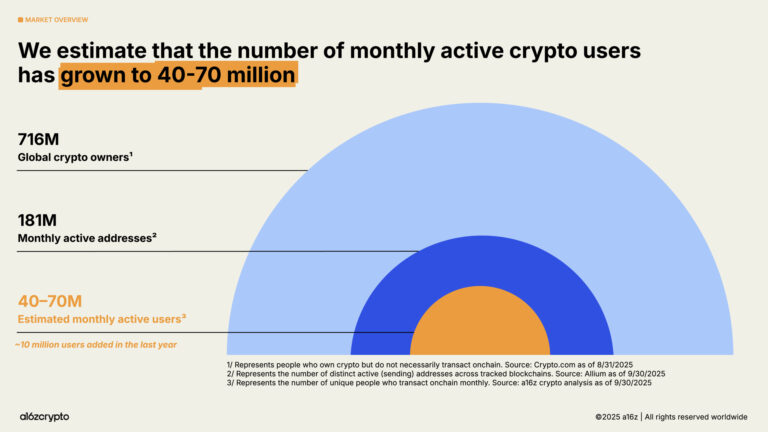
The crypto wallet market has expanded into a crowded arena. According to a16z’s 2025 State of Crypto report, 716 million people owned crypto, while only about 40 to 70 million were active users. It also reported that crypto mobile-wallet users reached an all-time high, up 20% year over year. That gap creates a large acquisition opportunity, but wallets are competing for users who may already own several apps or wallets.
MetaMask holds around 30 million monthly active users. Phantom peaked near 17 million MAUs in 2025 amid Solana activity. Trust Wallet and others command large bases as well. New entrants keep appearing, chains grow, and users face constant choices. Acquisition therefore costs more and filters harder than in earlier cycles.
Why marketing a crypto wallet is different
Wallet marketing differs from promoting most crypto products because users need to understand how their assets and signing credentials are managed. Whether a wallet is custodial or self-custodial, users also need clear answers about recovery, security, supported networks, and what happens when something goes wrong. A lot of them still get stuck on basic things like gas fees, choosing the right network, handling recovery phrases, or spotting phishing attempts. Value must be shown before any first transaction occurs. Downloads alone prove little; success is defined by funded wallets that complete on-chain actions and return later.
Understanding the wallet acquisition funnel
The acquisition funnel runs from awareness through consideration, installation or sign-up, first transaction, and retention. Top-of-funnel activity builds recognition of supported networks and core features. At the consideration stage, people want clear proof that the wallet is both secure and easy to use. Installation converts interest into a downloaded app or browser extension. Activation happens when the user funds the wallet or executes a first swap, send, or dApp connection. Retention tracks whether that user returns and transacts again over weeks and months. It varies sharply by chain. CoinGecko’s Q1 2025-Q1 2026 cohort study found that 26.2% of Ethereum wallets that made at least five transactions in Q1 2025 were still transacting on Ethereum a year later. Solana’s rate was 7.9%, while Sui’s was 4.6%.
Targeting crypto wallet users by on-chain behavior
Audience selection shapes efficiency. DeFi users tend to care most about multi-chain support and smooth transaction simulation. Traders usually care most about speed and clean order routing. Good gallery tools and simple marketplace access are what NFT collectors desire. What Web3 gamers need is in-app asset management and low-fee chains. Newcomers require guided onboarding and clear recovery explanations. Using broad targeting for generic “crypto interested” audiences usually wastes money and attracts people who install the wallet but don’t use it. Segment by on-chain behavior, preferred chains, and demonstrated activity levels whenever data allows.
Which paid channels actually work for wallets
Paid channels deliver scale when they reach verified crypto audiences. Crypto advertising networks place display and in-app ads on sites and apps where users already consume Web3 content. Contextual placement works better than generic interest targeting because it catches people while they research tokens, read protocol updates, or browse NFT drops. Crypto advertising networks can add audience signals beyond location and device. Bitmedia, for example, documents wallet-based and interest-based segments covering areas such as DeFi, gaming, trading, and NFTs. That gives wallet brands another way to align creative with users who already show relevant Web3 interests or activity.
Search ads are great if someone’s already searching for something specific, like a multi-chain wallet or a secure option for Solana. Social ads and retargeting help stay visible to people who have already shown interest. Going after the cheapest traffic usually backfires because those users rarely activate and leave quickly. It’s better to keep testing different audiences and creatives, then move the budget toward the groups that actually fund their wallets and come back.
Influencer campaigns: What actually converts in crypto
Influencer campaigns still work when creators show the product in action instead of reading from a script. YouTube is useful for longer walkthroughs of onboarding or swapping. On X, short threads and videos do a better job of highlighting specific features. Telegram communities can support localized launches and answer practical questions.
The Clinch Agency case study for Trust Wallet’s influencer effort across those platforms produced 3,480+ installs, with more than 2,190 of those installs becoming activated users and 1,370+ completing on-chain transactions. The cost per activated user fell by 22% after underperformers were cut.
Why education matters for wallet activation
Educational content reduces friction. Clear explainers show how to store a seed phrase or how transaction simulation lowers the perceived risk of installing a new wallet. Jamie Elkaleh, CMO of Bitget Wallet, put it well:
“As digital assets move closer to everyday financial use, the hurdles are increasingly behavioral rather than technical. Most people understand logging into an app, but not managing cryptographic keys.”
Listing supported networks also helps. Short videos and in-product guides that walk through the first funding or swap step improve activation rates. Content that ranks for problem-aware searches also feeds organic discovery.
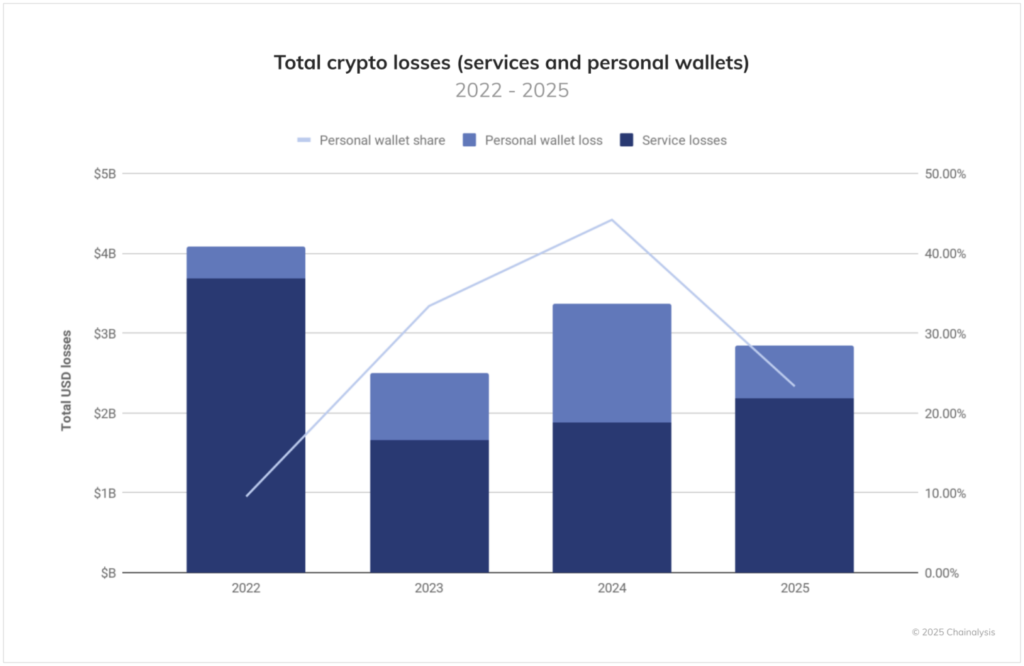
In Kraken’s 2025 survey of 789 U.S. crypto holders, 48% said they worried more about their security mistakes than about being robbed or scammed. They had reason to worry: 67% admitted to making at least one common mistake. Attackers stay busy as well. Chainalysis reported more than $2.17 billion stolen from crypto services by the end of June 2025.
Ledger’s 2025 “Don’t Get Rekt” campaign shows how security education can be packaged as entertainment. Its stop-motion series turned wallet-security lessons into short stories, giving the brand an educational asset designed for wider social distribution.
Referrals and partnerships that bring real users
Referral programs and partnerships can lower acquisition cost, yet they attract incentive-driven users if rewards require only a download or connection. Only give referral rewards when the new user actually funds their wallet or completes their first transaction. Adding simple requirements, such as a minimum balance or a set number of transactions, helps stop people from creating fake accounts just to collect bonuses. Ecosystem partnerships with popular dApps or chains embed the wallet as a recommended entry point and drive higher-intent installs.
App Store and landing pages: what actually helps
App-store optimization and landing-page work matter for mobile and extension distribution. Titles and screenshots that highlight security audits and core features improve conversion from store impressions. Landing pages should load fast, surface trust signals early, and guide the visitor straight to the install or create-wallet action. A/B tests on messaging and form length routinely surface large differences in registration rates.
App-store optimization starts before the install. Google Play says app quality and the pre-install experience, including the icon, title, screenshots, videos, and description, help users assess an app. Apple similarly says search visibility depends partly on metadata and user behavior and supports product-page testing, custom pages, localization, and deep links.
Messaging that works in wallet campaigns
Campaign messaging must address the points that decide installs and activation. Start with clear security practices and independent audits. Be upfront about whether the wallet is non-custodial or custodial. Supported networks should be visible without forcing users to search for them. If the product has strong usability features, like transaction simulation, recovery tools, or built-in swaps, those are worth calling out early. Mention fees only when they are competitive. Unique value, whether multi-chain convenience or tight integration with a specific ecosystem, needs to appear early. Vague claims of “best security” without supporting detail fail.
Trust building continues after the install. Publishing audit reports and being open about past incidents (when they happened) helps reduce user anxiety. Clear explanations of how keys are managed also make a difference. Wallets that openly explain recovery steps and phishing risks tend to keep more of the users they bring in.
Does localization make a difference?
Localization improves performance in high-growth regions. Asia, Latin America, Africa, and Europe have different languages, references to payment methods, and emphasis on chains. Campaigns that adapt creatives and targeting to local usage patterns convert better than global English-only campaigns.
Apple specifically recommends localizing product-page metadata and keywords for markets where an app is offered, while its custom product pages allow different messaging and screenshots for specific audiences or campaigns.
Measuring what actually matters
Measurement focuses on quality over volume. Track cost per install, cost per activated wallet (first funding or transaction), activation rate, first-transaction rate, day-7 and day-30 retention, and lifetime value. Campaigns that stop measurement at the install stage consistently overstate results. Continuous measurement of the full funnel and regular experiments turn acquisition spend into durable users instead of temporary downloads. Iterate messaging when activation stalls and keep shifting budget toward the segments that fund wallets and returns.
Wallet CAC benchmarks often sit higher once activation is required; pure install CPIs can look cheap, while true activated costs run several times higher. On-chain activity gives a clearer picture of user quality than store downloads alone.
The attribution gap: Why last-click models fail wallet marketers
Attribution remains imperfect. Users see an ad, research later on another device, install, and then transact days afterward. Cookies and last-click models break at the wallet-connect handoff. Tools that capture UTM parameters or campaign IDs at the moment a user connects their wallet and then track later on-chain activity give a clearer picture of what’s working. Multi-touch and time-decay models can help share credit across different touchpoints. Perfect tracking is rare because people often use several wallets and move between chains. Even partial data is useful, though, because it shows which channels bring in users who actually fund their wallets and stick around.

Related Posts