






Web3 projects spend a lot of money on getting new users, but it’s still hard to get wallet holders to use their wallets. The two main points of the debate are ads in apps and traffic to websites that comes from SEO and paid campaigns. One promises to take action on the chain right away. The other one builds trust and knowledge over time. Performance varies based on campaign objective and funnel stage.
Understanding the Web3 conversion funnel
In Web3, action on the blockchain, not clicks, is what counts as conversion. Performance is based on how wallets behave, such as how many connections, transactions, liquidity provision, and staking they make, rather than how many page views or cookie-based sessions they have. Metrics like Total Value Locked (TVL) and Cost Per Wallet (CPW) show real participation, instead of just how many people visit.
What are in-app ads in Web3?
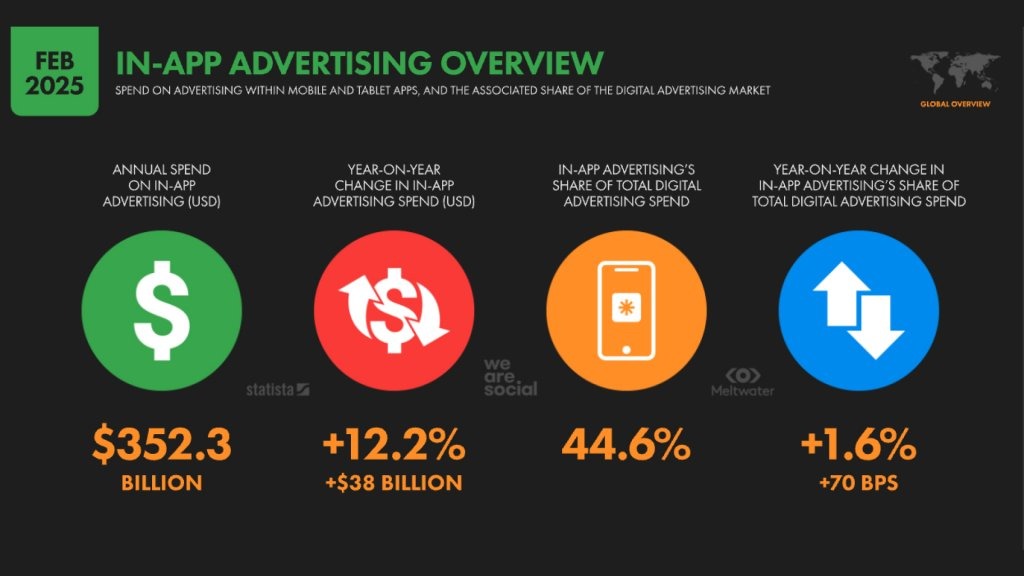
Web3 in-app ads are paid ads that show up in decentralized apps like crypto wallets, NFT marketplaces, GameFi platforms, and DeFi dashboards. Developers use a crypto ad network’s Software Development Kit (SDK) to make money without having to deal with Web2 ad giants. They do this by showing in-app video ads (short clips that tell a story), rewarded videos (watch and earn tokens), native ads (ads that blend in with sponsored swaps), or in-app display ads (banners that show up during transitions). A recent study by EMARKETER and Discord found that 65% of US marketers agreed that users like rewarded ads, and 46.3% said that rewarded ads make users feel more in control.
What makes them powerful is targeting high-intent users. They’re already engaged in crypto, which swaps tokens or checks portfolios. With on-chain behavioral targeting, advertisers can send ads to wallets with certain histories, like those that stake in similar protocols. Click-through rates can soar, often doubling those of web ads (0.54% vs. 0.23%), because users are primed for action.
What is website traffic in crypto marketing?
Website traffic in crypto marketing measures how many people land on a project’s website or documentation over time. It’s all about getting new users through organic SEO, paid PPC across crypto ad networks, as well as mentions in forums and industry media. A website gives users time to review the whitepaper and evaluate the project’s roadmap before deciding to connect a wallet.
Website traffic also gets people to Discord or Telegram, which helps it get leads. They reach a wider audience than in-app ads, which only target a small group of active users.
Conversion performance comparison
So, what are the best things about conversions? The stronger channel is determined by the specific outcome being optimized, immediate on-chain action, or long-term audience development:
| Performance metric | In-app ads | Website traffic |
| Click-Through Rate (CTR) | Higher | Lower |
| Conversion Rate | Generally higher than web due to reduced friction and logged-in environments | Lower; often used for research and consideration rather than immediate action |
| User Engagement | High; personalized, and session-focused | Moderate; higher bounce rates are common |
| Speed / Performance | Faster; app environments use local storage and preloaded assets | Slower; dependent on browser load and network conditions |
| Ad Format Variety | Wide range: native, interactive, rewarded, video | More limited; banners, interstitials, standard display |
| Content/Product View Depth | Users view up to 4.2 x more products within apps | Fewer products viewed per session |
| Targeting Capability | Strong; device IDs and behavioral signals enable precision | More restricted; relies on cookies and constrained by privacy regulations |
In-app ads do better at getting people to buy things directly (for example, with higher CTRs and on-chain proofs), but website traffic wins on scale and education, which often leads to long-term growth.
When in-app ads perform better
When in-app placements fit with what the user is already doing, they work best. If the placement feels right, activation happens quickly. Conversion dies if it feels intrusive. As Tanya Petrusenko, CEO at Bitmedia, explains:
“In‑app advertising for 2024–2025 is driven by engagement, privacy‑first measurement, and automation. Rewarded video commonly posts completion rates of 60–80% and can achieve eCPMs of $10–18 in top markets like the US, making it a cornerstone for gaming and edtech. Playable ads deliver CTRs up to ~12% and can boost short‑term retention by 25–35% in mid/hyper‑casual titles. Games still lead monetization, while fintech and e‑commerce are ramping up spend on native and video formats – leveraging first‑party signals and privacy‑safe attribution to maximize ROI.”
In-app advertising delivers the strongest results under specific conditions:
- Natural breaks and changes: There are already short breaks between levels in a game, after confirming a DeFi transaction, or when switching between app sections. A full-screen placement at the right time during that pause doesn’t break the flow.
- Opt-in rewards: Rewarded video and completion-based formats do exceptionally well when people choose to participate. Giving players tokens or boosts in exchange for a short activity is a strategy to get them to pay attention. In GameFi, this keeps people interested without ruining the fun.
- Entry points that are easy to see: People are most engaged when they see placements above the fold on wallet dashboards or shortly after the app launches. Consumers usually check their accounts or get ready to conduct a transaction, thus timely prompts, especially for staking or limited drops, urge consumers to act swiftly.
- Re-engagement based on behavior: Promotions based on activity seem to work better than static placements. Nudges that happen after a period of inactivity or a milestone tend to work better because they are based on how people really use the product instead of just general messages.
- After-action momentum: Users are more open to the next step after a successful swap, stake, or mint. A subtle follow-up prompt, like asking about governance, referrals, or feature exploration, keeps people interested and adds value over time.
When website traffic performs better
When users need context before spending money or linking a wallet, campaigns that are driven by websites do better. Website traffic outperforms when:
- New project launches: Early-stage protocols need explanation before anyone connects a wallet. A structured website that includes a whitepaper, roadmap, team information, and technical overview establishes legitimacy and reduces perceived risk. Users are unlikely to connect wallets to projects they do not understand.
- Long-term organic growth through SEO: Over time, educational content that is optimized for search engines could bring in more and more visitors. Organic visibility lasts longer than paid placements in apps. This lowers the cost of getting new customers over time and makes the business more stable.
- Onboarding Web2-to-Web3 users: New crypto users need help getting started. Websites can offer onboarding information, wallet setup guidelines, risk warnings, and FAQs that don’t need any prior knowledge of blockchain.
- Technical or infrastructure products: Solutions like Layer-2 protocols, SDKs, or developer tools need detailed documentation, explanations of how the architecture works, and examples of how to implement them. In-app placements can’t do structured documentation like website environments can.
- Community development and ecosystem building: Communities that are sustainable come about through informed participation. Visitors who explore documentation, blog posts, or ecosystem updates are more likely to join Discord or Telegram channels with context and long-term intent compared to users redirected from short-form ads.
Risks and operational challenges in Web3 acquisition
Web3 marketing involves higher operational sensitivity because users interact while connected to wallets and smart contracts. This makes traffic quality, security controls, and attribution accuracy more important than in traditional digital advertising.
In-app advertising can carry risks if creatives are not properly moderated, as malicious redirects or phishing attempts may target wallet-connected users. Since blockchain transactions are irreversible, even small security gaps can impact trust.
Website acquisition, on the other hand, faces challenges such as bot traffic, Sybil activity, and cloned domains that inflate metrics without producing real on-chain engagement. Weak attribution models may also make it difficult to connect traffic to actual wallet actions.
These risks are largely manageable when campaigns run through reputable crypto ad networks like Bitmedia, combined with strict creative review, anti-bot filtering, secure integrations, and wallet-based performance tracking. With proper execution, both channels can operate safely and deliver measurable Web3 growth.
A hybrid strategy
A full-funnel strategy typically integrates website traffic for education and in-app placements for transactional conversion. Websites handle awareness and education at the top, and in-app ads convert at the bottom with on-chain transactions. Cross-retargeting makes it stronger, tracking web visitors with pixels and then hitting their wallets when they are funded.
The web builds trust, which makes people less afraid to sign off in-app. SEO is cheap in the long run, which makes up for the higher cost of in-app targeting. In phase one, a DeFi blog post gets people to visit the site and download the whitepaper. In phase two, in-app banners in wallets push “Stake Now,” which raises TVL.
Choosing the right path forward
The choice between in-app ads and website traffic is a strategic allocation decision. In-app ads usually do better than website traffic when it comes to conversions and engagement. They have conversion rates that are up to 150% higher and click-through rates (CTR) that are 2 to 3 times higher than mobile web ads. In-app ads are better for direct-response campaigns because they can target people more effectively. Website traffic is better for broad reach, content discovery, and SEO. For increased growth and onboarding, make website traffic the most important part of your Web3 marketing mix.

Related Posts