





A new blockchain product can be difficult to explain in a banner or a short social post. A YouTube creator has the capacity to show how a game works, walk through a wallet feature, explain token utility, or unpack a new ecosystem. YouTube is most effective when a Web3 product needs context.
Web3 influencer marketing gives projects a way to put that explanation in the hands of creators who already understand the audience. The advertiser provides the product information and campaign requirements, while the creator explains it in a format their audience already follows.
Why YouTube marketing works for Web3 projects
Web3 products often have a learning curve. An NFT marketplace has mechanics to explain, such as how minting works, what the collection offers, and where to buy. A blockchain game often needs a live walkthrough more than a description. A DeFi product can require users to understand a feature before connecting a wallet.
YouTube gives creators room to explain those details. They can demonstrate the product and place it in a use case their audience already understands. Crypto YouTube influencers benefit most directly, since their audience is already primed for market analysis, tutorials, project reviews, or gaming content.
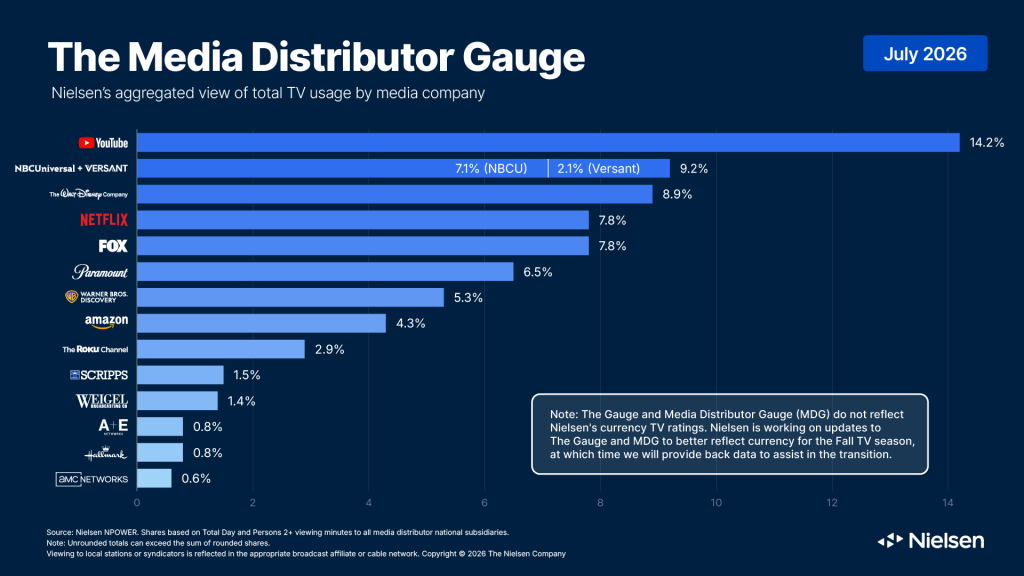
YouTube stopped being a phone-sized channel some time ago. Nielsen’s July 2026 Gauge reports, published on 10 September 2026, put YouTube at a record 14.2% of total US TV watch time, with its lead over the second-placed distributor now at 5.0 share points.
The broader creator market is growing too. IAB projected U.S. creator-economy ad spending at $37 billion in 2025, up 26% year over year, and identified creator selection and measurement as advertisers’ biggest challenges. The data covers the wider creator economy and shows why creators are increasingly treated as a distinct advertising channel.
How to choose Web3 YouTube influencers
YouTube influencers for Web3 come from several closely related niches, including crypto, NFTs, blockchain, metaverse, and gaming. Crypto commentators may suit a token or exchange, since their audience already tracks markets rather than gameplay. NFT YouTube influencers are relevant for a collection or marketplace. Blockchain educators tend to explain infrastructure products best, since that’s a technical sell that benefits from someone used to breaking down how the tech actually works. Player acquisition and game registrations call for a different crowd entirely – gaming creators whose audience shows up for gameplay rather than price charts. A metaverse project, meanwhile, needs someone who spends real time inside virtual worlds.
When you’re evaluating a creator, audience fit is what to check first.
Review the creator’s niche and recent videos when vetting influencers on Twitter and YouTube. Compare average views across recent uploads instead of relying on subscriber count. Nicolas Bon, founder of influencer agency Clark Influence, told HypeAuditor:
“Followers tell me the potential audience. Reach tells me the audience the creator actually gets. We look at consistency across multiple pieces of content too, not just the best-performing posts.”
Once you have average view data, dig into audience demographics, engagement quality, comments, production quality, previous sponsorships, and how the creator discusses products they have covered before.
Ask a simple question: would these viewers care about the project without the sponsorship? A channel with 40,000 subscribers that consistently attracts Web3 gaming fans can be more useful for a game launch than a general crypto channel with several hundred thousand subscribers.
Cost in YouTube influencer advertising varies widely. Influencer Marketing Hub’s benchmarks, updated 31 August 2026, put a sponsored video at roughly $200 to $1,000+ for micro creators (10K-100K subscribers) and $1,000 to $10,000+ for mid-tier channels (100K-500K), with sponsorship CPMs commonly between $15 and $30. Crypto and finance channels typically charge more than these general-market figures. A dedicated video built around your project also costs considerably more than a 60-second integration inside a regular upload.
Large vs. niche Web3 YouTube influencers
Large creators bring broad exposure and are a natural fit for high-visibility launches. Smaller or niche channels give advertisers access to more focused audiences, which is useful when the campaign depends on education or a specific action.
Creator size works differently across campaigns, so the useful tier depends on the budget, GEO, audience intent, campaign objective, and recent creator performance.
Bitmedia’s recent Web3 gaming campaign makes the point concretely. Eleven Tier-2 YouTube creators across Europe and Brazil generated registrations for a mining game. NFTLABs, with 77,000 subscribers, drove 193 registrations; Clem NFT, with 104,400 subscribers, drove 141. Subscriber size alone did not determine the outcome, and the campaign was localized by market and language.
| Creator | Subscribers | Views | Registrations |
| NFTLABs | 77K | 3,351 | 193 |
| Clem NFT | 104.4K | 2,974 | 141 |
| OuluH | 157.5K | 6,158 | 27 |
| YakuGames | 110.5K | 355 | 22 |
YouTube influencer campaign formats for Web3
A YouTube influencer campaign can use a dedicated sponsored video, product or project review, integration inside an existing video, gameplay content, tutorial, launch coverage, or a shorter mention.
The format should match the product. A gameplay placement needs a working build. A review needs product access and enough time to test it. A launch video needs confirmed dates and links. Tutorials fit products where users need guidance before taking the first step.
For Web3 gaming marketing and other campaigns, buy enough creator time for viewers to understand the product without giving the sponsorship more airtime than the audience expects.
How to brief Web3 YouTube influencers
Web3 projects often have more information than viewers need in the first few minutes. A strong brief should separate what the creator must know from what viewers actually need to hear.
Provide the core product description, target audience, key features, approved facts, terminology, links, campaign dates, tracking link, disclosure requirements, and any claims that need special care. Give the creator product access where possible. Clarify the essential points, then let the creator explain them in their normal voice.
Over-scripted sponsorships can sound disconnected from the rest of a channel. Viewers know how their favorite creator normally speaks, so an unnatural sales pitch can weaken the trust the partnership depends on.
When to launch a Web3 YouTube influencer campaign
Influencer content works best when viewers can act on what they just watched. For an NFT mint, the collection page, mint details, eligibility information, and purchase flow should be ready when the video goes live. A token launch needs confirmed timing and a clear destination. A Web3 game needs a working registration path.
Coordinate the campaign with the wider Web3 marketing plan. A creator video published before a product is ready can waste high-intent traffic. Publishing after the main launch moment can miss the audience spike.
Give creators enough lead time to produce content while keeping publication close to the action.
How to measure a Web3 influencer campaign
Views help measure just reach. Conversion data shows what viewers did after seeing the promotion. The choice of influencer marketing metrics should follow the action the campaign is designed to generate. Build attribution before the first video is published.
Give each creator a unique URL with UTM parameters, and use referral codes or dedicated landing pages where practical. Next, track the action that matters: a sign-up, game registration, qualified lead, product activation, wallet connection where appropriate, or another campaign-specific conversion.
Bitmedia’s recent five-day YouTube campaign case study shows how 11 creators were tracked by GEO, subscriber count, views, and registrations; the campaign generated more than 700 registrations.
Between November 17 and 27, 2025, one Bitmedia MMO campaign produced over 150,000 YouTube views, with UTM-tracked website traffic and multiple creators surpassing 7% engagement. The campaign focused on awareness and acquisition around a token listing. Although these are campaign-specific outcomes rather than general standards, they demonstrate the significance of creator-level attribution.
Common Web3 influencer marketing mistakes
Choosing an influencer because the subscriber count looks impressive is an easy mistake. A mismatch can produce large reach with little interest.
Excessive control creates another problem. When advertisers dictate every sentence, creators have less room to make the explanation fit their audience. Promoting before the landing page or onboarding path is ready carries the same risk. A broken link, vague instructions, or an unfinished product can burn through traffic that took real time and budget to bring in.
Tracking is often overlooked when deals are arranged informally. Every creator should have an identifiable traffic source before publication, so performance can be compared later.
Transparency and responsible Web3 promotion
Transparency matters in crypto and other financial-adjacent categories. YouTube requires creators to declare paid promotion when videos contain branded content, sponsorships, or endorsements, with a disclosure label shown to viewers. YouTube also says creators remain responsible for applicable legal requirements.
The FTC advises that material connections should be disclosed clearly and conspicuously and says a YouTube disclosure should not rely only on the video description.
Advertisers should make the sponsorship obvious and provide creators accurate information. Avoid asking them to present speculation as fact. Do not script claims about guaranteed profits or benefits the project cannot be substantiated. A creator should be able to distinguish what the product does today from what is planned.
How to find YouTube influencers for Web3
Finding suitable YouTube influencers manually can take significant time when a campaign needs a specific niche, GEO, language, audience profile, or budget. An influencer marketplace can reduce that search work by putting creator information in one place.
Bitmedia’s marketplace helps advertisers discover relevant creators and compare options using information such as niche, audience, reach, and campaign requirements. For a Web3 project launch, this gives advertisers a more structured way to find and compare creators without treating it as a guessing game. For campaigns that need several creators, the marketplace model also makes comparison easier. Advertisers can evaluate creators against the same requirements and keep tracking consistent across placements.

Related Posts