






Digital advertising worked on a simple promise for most of the last ten years: the more specific your target, the better your outcomes. Advertisers spent a lot of money on highly targeted advertising based on job titles, groups of interests, browsing history, and small groups of behaviors. The logic was clean: spend less, win more. But in 2026, that logic is breaking down. The best-performing campaigns are no longer the most precise ones. They’re the ones built around the right audiences, like scalable, cross-platform groups defined by how people think and spend, their financial behavior, and platform habits.
This shift is a recognition that precision without scale stops working at a certain point, and most brands have already crossed that line.
Why niche marketing is losing its dominance
The main reason to target a niche was always efficiency: there was less competition for impressions and more personal messages. For brands selling specialized products to specialized audiences, it still has a role. But for the broader landscape of digital advertisers, fintech platforms, trading apps, AI tools, and gaming services, niche targeting is becoming less effective.
The core problem is scale. When an audience segment is too narrow, ad platforms struggle to exit the learning phase, producing higher CPMs and inconsistent delivery. Meta’s advertising systems explicitly flag this: if an audience is too small, the algorithm doesn’t have enough signal to optimize properly.
Fragmentation compounds the problem. Users don’t live on one platform. Someone who fits your ideal customer profile might hear about your brand on a podcast on Monday, a YouTube pre-roll on Wednesday, and a CTV placement on Saturday. Niche campaigns concentrated on a single channel miss the full picture of how that person actually moves through the digital world.
Then there’s the data problem. Privacy legislation, such as the GDPR and the CCPA, has progressively restricted how platforms use personal behavioral data. Shifting regulations limit what platforms can use for targeting, so creative quality and algorithmic fit now carry more weight than granular behavioral data. This puts niche strategies, which depend heavily on detailed behavioral signals, at a structural disadvantage.
The rise of large-scale audience targeting
What’s replacing niche-first thinking is audience-based advertising built around behavioral and psychographic profiles rather than category labels. Instead of targeting “crypto traders aged 28-35,” advertisers are asking a different question: who are the people most likely to act on this offer, regardless of the label they carry?
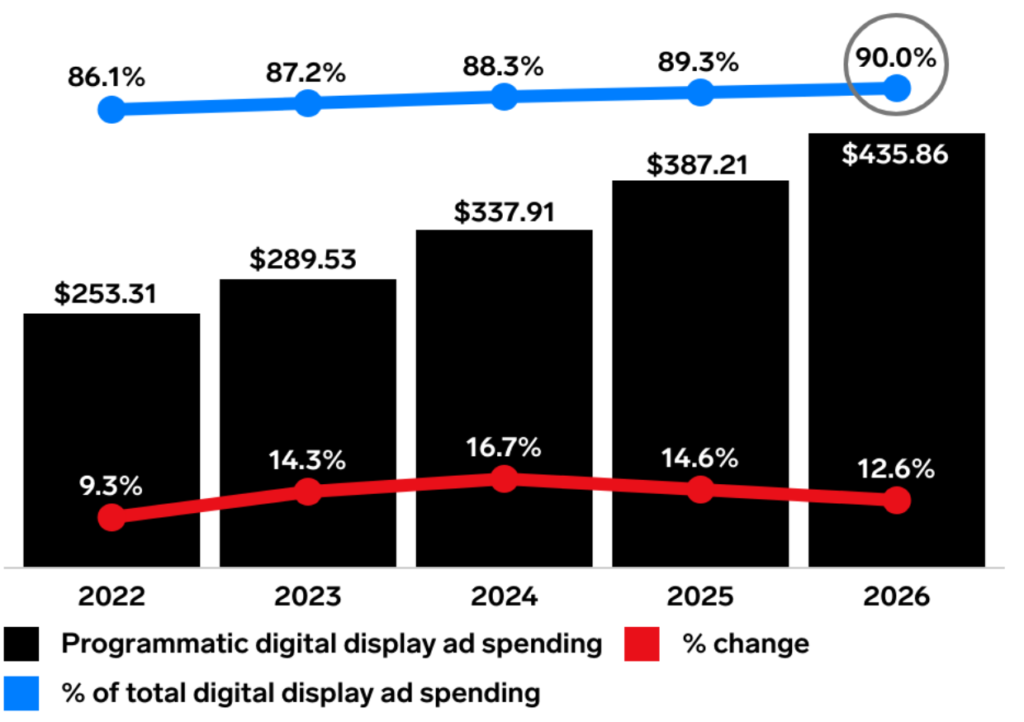
The market has already answered. In 2025, programmatic digital display ad spending in the US grew 13.6%, surpassing $180.4 billion and accounting for nearly 92% of all digital display ad spend. Global programmatic ad spending reached $595 billion in 2024 and is projected to approach $800 billion by 2028, according to Statista.
| Year | US Programmatic Display Spend | Global Programmatic Spend |
| 2024 | $178.25B | $595B |
| 2025 | $180.4B | $716B |
| 2026 (projected) | $203B | $725B |
The shift to scale is about moving to algorithmically optimized audience targeting that identifies high-value users based on what they do, rather than what label they carry. Categories are assigned once and forgotten. But behavioral audiences are dynamic; they update in real time as users engage and convert. That signals intent across platforms.
Technology driving the audience-first strategy
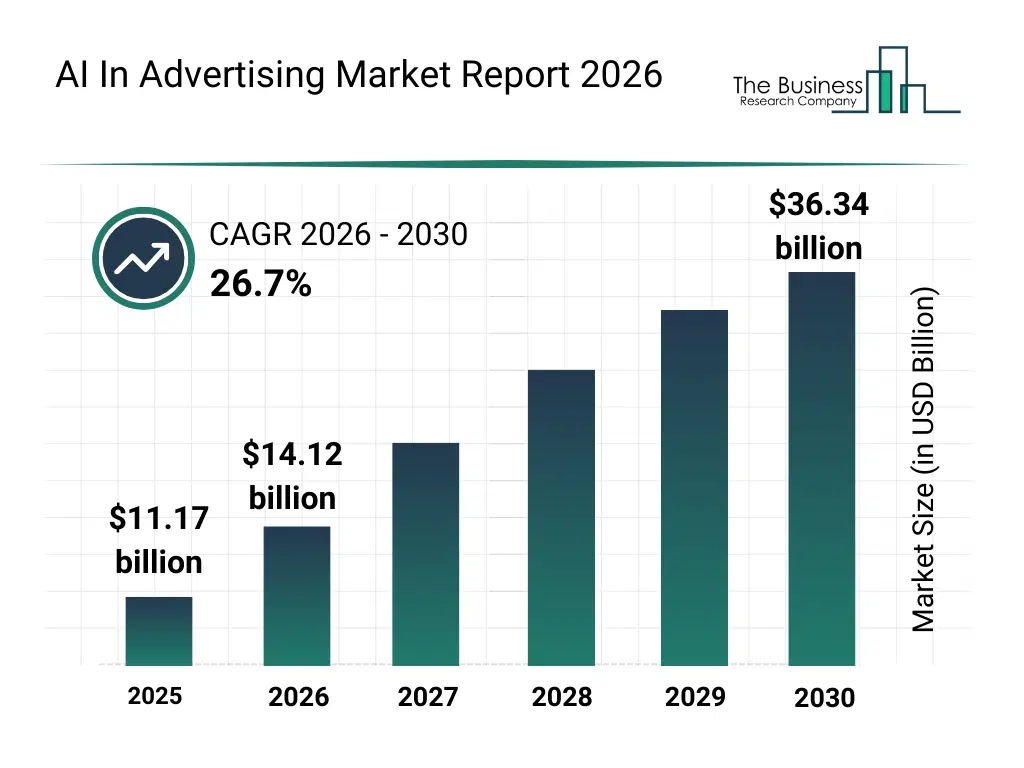
AI and machine learning power this shift, with the AI ad market hitting $14.12 billion in 2026. Platforms like Google’s Performance Max and Meta’s Advantage+ take in thousands of behavioral signals like browsing patterns, engagement rates, conversion history, device behavior, and continuously optimize toward users most likely to convert, faster and more accurately than any manually-constructed niche segment.
Large language models have improved targeting capabilities significantly, and allow platforms to analyze content in detail, including individual TV scenes or complete podcast transcripts. The result is hyper-relevant ad placement that doesn’t require personal user data at all. Gartner’s Ewan McIntyre, VP Analyst and Chief of Research for the Gartner Marketing Practice, captured the moment well:
“What’s perplexing about this is that marketing has never had more access to data, or more technology tasked with building customer understanding and targeting messages. Right now, technology-driven customer engagement is at an inflection point. The vast majority of marketing teams are accelerating AI initiatives; 95% of CMOs in 2024 reported that GenAI investments are a priority.”
Contextual targeting has also made a strong comeback. Instead of tracking individuals, AI now analyzes the content environment itself and matches ads to moments rather than profiles. Integral Ad Science (IAS) research shows 72% of consumers feel that the content surrounding an ad affects how they see it, a finding that makes AI-powered contextual intelligence increasingly valuable to privacy-conscious advertisers.
What makes an audience valuable to advertisers
If a category label is too narrow, what should advertisers look for instead? The answer lies in behavioral and attitudinal characteristics that predict purchasing behavior across multiple verticals.
The most valuable audiences in 2026 share a cluster of traits: they are early adopters of technologies and financial products; active traders and investors comfortable with new platforms; financially educated consumers with higher risk tolerance; and digitally native users who engage deeply with fintech, SaaS, gaming, and AI tools.
These characteristics make a person commercially valuable across an entire ecosystem of brands, well beyond any single advertiser’s category. A user who actively manages a trading portfolio is also likely interested in premium analytics tools and fintech subscriptions. Behavioral audience segments remain the most purchased audience type, approximately 48% of programmatic spend, because the behavior tells you more than the label ever could.
Audience segmentation marketing prioritizes behaviors over niches, as these groups deliver superior ROI through consistent engagement.
How Bitmedia helps advertisers reach high-value audiences
Bitmedia connects advertisers to premium audiences, 1.5 billion monthly impressions from high-intent users across finance, Web3, software, gaming, and apps. Self-serve tools like smart bidding and API tracking enable audience-based advertising at scale.
Platforms target via wallet activity and interests, and reach early adopters and traders without niche limits. Multiple formats (banners, in-app, Telegram) optimize for targeting audience behaviors. The platform generates 1.5 million clicks monthly across those formats.
Brands across fintech, gaming, SaaS, and AI tools use Bitmedia to reach financially active users, audiences that perform across various categories.
The future of audience-driven advertising
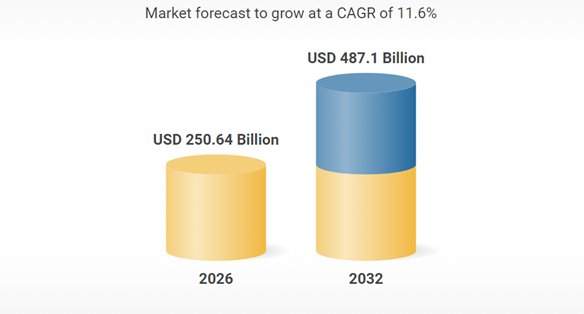
The trajectory of digital advertising points unmistakably toward audiences, not niches. Contextual advertising is projected to reach $562.1 billion by 2030, with nearly 50% of CMOs planning to increase contextual targeting budgets. In 2025, based on Proximic by Comscore’s report, 40% of US marketers relied on first-party data as their primary privacy-centric targeting approach.
By 2026, traditional search engine volume is predicted to drop by 25% by Gartner as AI chatbots and virtual assistants become mainstream. Audience targeting must reach people earlier in their discovery journey, not just at the moment of search. Audience-first strategies are built for exactly this challenge.
What doesn’t survive this transition is the old model: manually-built niche segments, single-channel concentration, and category-based targeting without behavioral signals. The brands winning on paid media in 2026 understood early that their job was to find an audience, not a niche.

Related Posts