





Advertising crypto is like running an obstacle course. Crypto ads on Google often see cost-per-click levels roughly 40–70% higher than traditional finance verticals. On top of that, Meta declines around 55% of DeFi and staking promotions, while ICO and token-sale ads see global rejection rates of roughly 75%.
There’s also another uncomfortable truth: even when campaigns go live, up to 30% of crypto ad traffic on some platforms is flagged as bots. That means a significant share of impressions may never come from real users at all.
That’s why there’s little room for error. Weak execution is expensive.
So what actually works now? Which formats are winning attention and driving results in 2026? Read in the article.
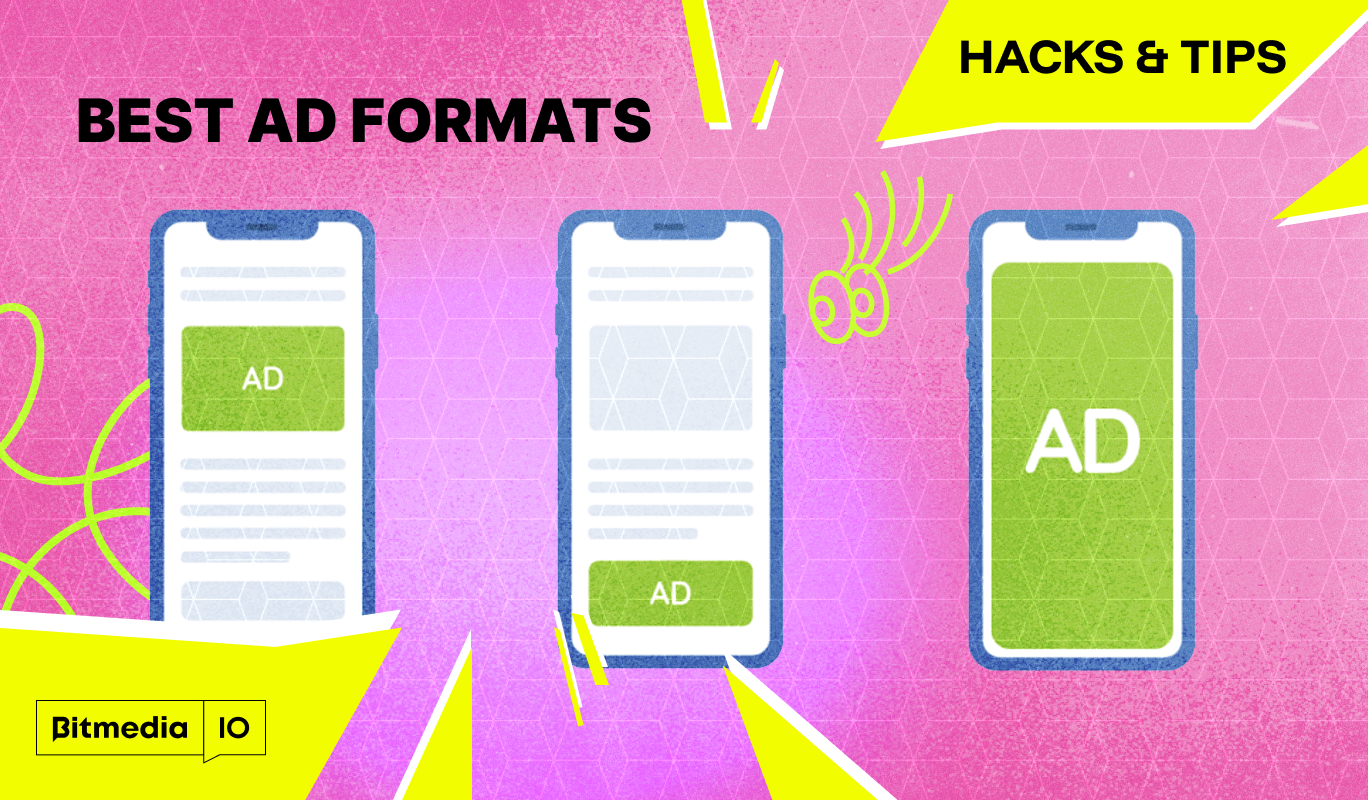
Best crypto ad formats in 2026
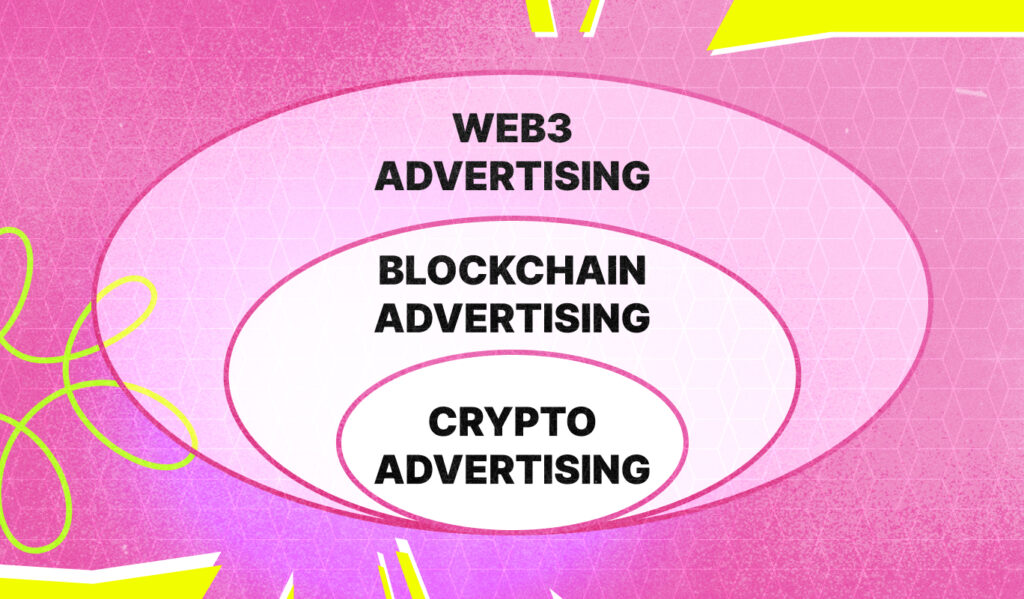
Before reviewing the formats, it’s important to clarify the terminology. Crypto advertising promotes tokens, exchanges, wallets, and DeFi products; blockchain advertising focuses on protocols and infrastructure; and Web3 advertising covers both and also decentralized apps, Web3 games, NFT platforms, and DAOs.
Most paid placements across these areas fall under display ad formats. It’s an umbrella category that includes text, image, HTML5, video, native, push, and responsive ads. Crypto banner ads are only the classic banner units, such as image, HTML5, and responsive banners.
Text ads
Text ads are the simplest format: they look like short blocks of copy with a headline and a clickable link or button. There are usually no images or only very minimal styling.
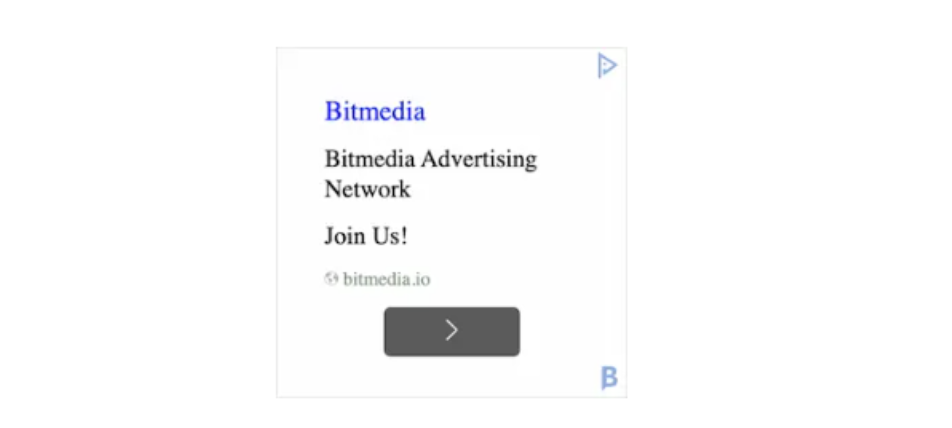
Image ads
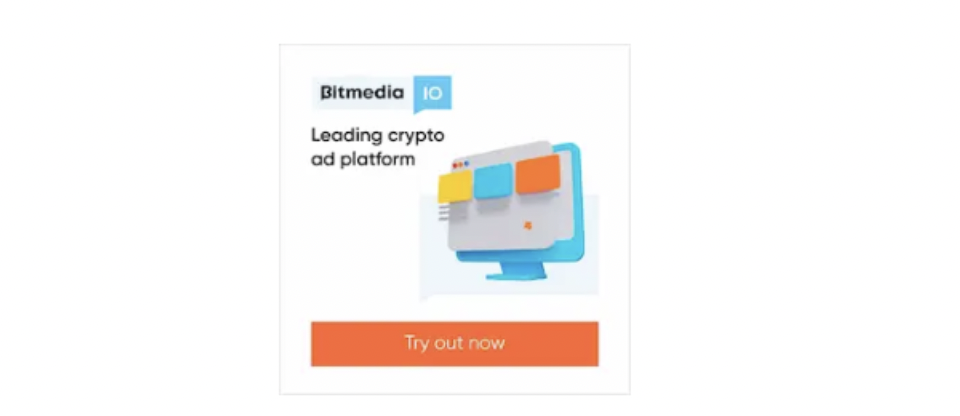
Image ads are static visual banners. They typically contain a background visual, a short message, a logo, and a call-to-action button embedded in the image. They are usually referred as classic display banners.

HTML5 ads
HTML5 ads are animated or interactive banners. Instead of a static picture, they include motion, transitions, counters, or small interactive effects. Visually, they feel more dynamic and attention-grabbing than static image banners.
Responsive ads
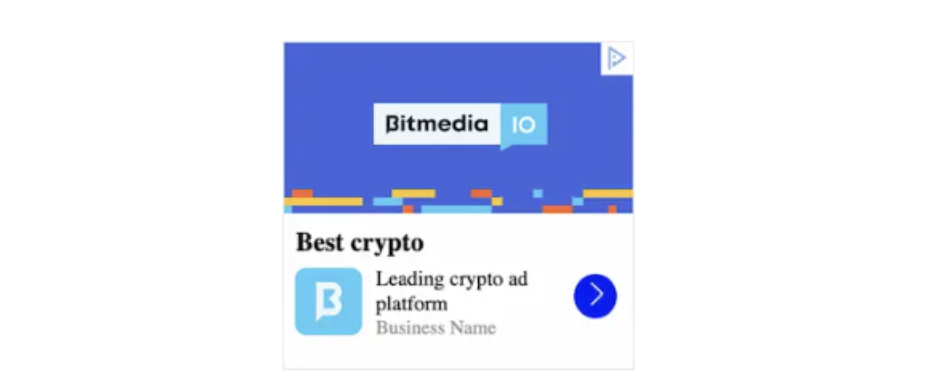
Responsive ads look like flexible banners that automatically adapt to the placement and screen size. You provide several headlines, short descriptions, a logo, and an image, and the ad platform mixes these elements into different combinations. To the user, they often appear as native-style blocks in a feed, with an image on one side and text plus a call-to-action on the other.
Video ads
Video ads appear as short video clips inside feeds, stories, or before other videos. In web3 marketing, they often feature a founder talking, a fast product demo, or simple motion graphics that explain a protocol or feature.
Push ads
Push ads look like small pop-up notifications on a phone or desktop browser. They contain a short line of text, sometimes a small icon, and a link.
Visually, crypto push ads resemble system notifications or app alerts and are designed to feel immediate and time-sensitive rather than like a traditional banner.

Native ads
Native ads look like regular editorial content at first glance. They appear as sponsored articles or posts inside crypto media sites or news feeds, matching the style and layout of surrounding content. The only visible difference is a small “sponsored” label.

Crypto native ads can technically use text, images, or video inside them, but their main difference from other ad formats is that they look like regular content on the website.
See the summarizing table for the ad formats mentioned.
| Ad format | How it looks | Strengths | Limitations | Best use in crypto/Web3 |
| Text ads | Short text block with headline + link/button | Fast to produce, loads quickly | Low visual impact | Announcements, compliance-sensitive campaigns |
| Image ads | Static banner with fixed design | Clear visual branding | Can suffer from banner blindness | Brand awareness, token launches |
| HTML5 ads | Animated or interactive banners | More attention-grabbing | Higher production cost | Product demos, explainers |
| Responsive ads | Auto-adapted layouts | Flexible across devices, scalable | You don’t control the design look | Multi-placement crypto campaigns |
| Video ads | Short video clips | Strong storytelling, high engagement | Most expensive to produce | Founder messages, product walkthroughs |
| Push ads | Small notification | Immediate visibility, high click rates | Can feel intrusive | Time-limited offers, staking or airdrop alerts |
| Native ads | Sponsored content that matches site/editorial style | Blends with content, builds trust | Slower to produce | Educational pieces |
What crypto ad formats are losing effectiveness in 2026
You may be surprised, but the formats themselves aren’t losing relevance; it’s how they’re used and delivered.
Pop-under windows that open behind the browser were already annoying in 2020. Now, most users associate them with scam tokens and shady exchanges. Full-page interstitial ads that block the screen have the same problem. People close them instantly without reading.
The same goes for cheap, broad display buys. Impression numbers may look great in reports, but real engagement stays low because targeting is too wide and unfocused.
Auto-play video with sound and sticky players also create more irritation than persuasion. Video still performs, but only when users actively choose to watch it.
How to stay compliant and keep your brand safe
Your ad format also affects approvals and reputation, too. Pick the wrong format, and your campaign can get stuck in review or flagged by regulators.
Video and image ads get the toughest checks because it’s easy to sneak in big promises or “too good to be true” claims through visuals and voiceovers. That means stricter reviews, more edits, and more rejected creatives if your wording isn’t clean.
Sponsored content also needs clear labels. No hiding the promo tag in tiny text. Different countries want different disclosure styles, and getting this wrong can get your ad pulled even if the results look great.
Your ad “neighbors” matter too. In the latest study, the Integral Ad Science Media Quality Report (20th edition) found that 68% of users believe it’s inappropriate for brands to advertise next to hate speech or aggressive content and 51% saying they would stop using a brand if its ads ran next to inappropriate content.
Why format diversity wins in 2026
Today’s crypto users rarely make decisions from a single touchpoint. They read, watch, compare, and revisit across multiple platforms and content types before taking a conversion action.
As Kacie Jenkins, Head of Marketing at Anthropic, observed from real attribution data, “If I only looked at last-touch attribution, I would have killed everything driving our growth.” She found that high-intent buyers consumed 7–8 different marketing touches (email, organic content, partner interactions, nurture campaigns, and events) long before they showed up as “direct” conversions from the website.
This leads to an important conclusion: each ad format serves a distinct role. Text and native ads are effective for early-stage discovery and understanding, when users are learning what a product is and why it matters. Image and HTML5 banners support visibility while users compare options and evaluate projects. Video and push formats work best closer to the action stage, when users are ready to sign up, deposit, stake, or return to the product.
Together, these formats form a structured funnel that leads to sustainable and predictable results.

Related Posts