







Many publishers still use basic ad structures with display banners and minimal programmatic setups. While this suffices for general traffic, crypto audiences differ: their activity follows market cycles, and engagement relies on their asset holdings or interests. Their activity shifts with market cycles, and engagement often depends on the assets they already hold or closely follow.
Crypto readers actively trade, hold significant on-chain assets, and make high-stakes financial decisions daily. Advertisers recognize this, making crypto one of digital advertising’s highest-paying verticals.
The state of crypto advertising in 2026
The industry has matured from an enforcement-led gray zone into a regulated, institutionally-backed vertical attracting significant budgets. Growth in crypto advertising is being driven by traditional financial institutions entering the space through spot ETFs, corporate treasury integrations, and stablecoin-based payment infrastructure.
Regulatory clarity has transformed access. Platform rejection rates for crypto ads have dropped roughly 60% since the 2025 regulatory frameworks took effect, with Google and Meta now running compliance-verified crypto campaigns. This means more advertiser demand is flowing into previously inaccessible inventory.
On-chain targeting has replaced cookies. Wallet-based segmentation has overtaken browser-based behavioral tracking, with advertisers increasingly targeting audiences using blockchain-verified behaviors like DeFi participation and wallet transaction data.
CPM levels in 2026 boost the vertical’s maturity. After the January 2026 reset, the global Facebook Ads average was $15.74; US campaigns averaged $22.20 in 2025, peaking at $28. Crypto campaigns on mainstream platforms consistently achieve the higher end of these ranges, driven by audience purchasing power, stringent creative compliance, and new institutional competition.
Best-performing crypto ad formats
In 2026, advertisers are increasingly prioritizing interactive ad formats that generate measurable conversions, shifting away from earlier strategies focused solely on broad visibility.
Rewarded video ads are the highest revenue format, with CPMs up to 10x standard banner ads. Users receive value, such as premium content access or in-game assets, in exchange for watching, resulting in exceptional completion rates. Web3 gaming and media publishers should prioritize this format.
Native ads consistently outperform standard display ads in crypto publishing. When clearly labeled and embedded within editorial flows, they deliver stronger CTR and higher trust. For exchanges, DeFi platforms, and wallet providers, native ads allow educational positioning rather than aggressive promotion.
HTML5 and rich media ads are interactive banners featuring live price feeds or mini product demos, and generate better engagement than static creatives. These formats reduce “banner blindness” while remaining compliant.
On-chain and wallet-native ads serve directly within Web3 wallets based on transaction history, precision targeting that no traditional advertising platform can replicate. Publishers with wallet-connected audiences unlock premium advertiser demand through this format.
Push notifications reach users at the moment information is actionable, well-suited for airdrops, token launches, and market updates, where timing determines conversion.
How to optimize crypto ad revenue step by step
Sustainable ad revenue growth demands structure. A practical framework tailored to Web3 publishers is outlined below.
1. Attract high-intent crypto traffic
Revenue optimization starts with the quality of traffic. Crypto advertisers prioritize audiences already interested in trading, wallets, exchanges, and decentralized finance.
Content such as exchange comparisons, token analysis, DeFi guides, and Web3 gaming coverage attracts high-value users. These readers often possess higher purchasing power and are more likely to register on exchanges or interact with blockchain products.
2. Integrate crypto-focused ad networks
Specialized crypto advertising platforms provide direct access to exchanges, wallets, and blockchain startups actively acquiring users. For example, Bitmedia reports serving over 1 billion ad impressions per month, reaching roughly 20 million unique users globally, while connecting advertisers with thousands of crypto websites across its publisher network.
3. Use multiple high-performing ad formats
Ad format diversity significantly affects revenue potential. Instead of relying only on standard banners, major crypto media platforms such as CoinDesk and Cointelegraph monetize their audiences through multiple advertising formats, including display banner placements, newsletter sponsorships, and native sponsored articles integrated into editorial content.
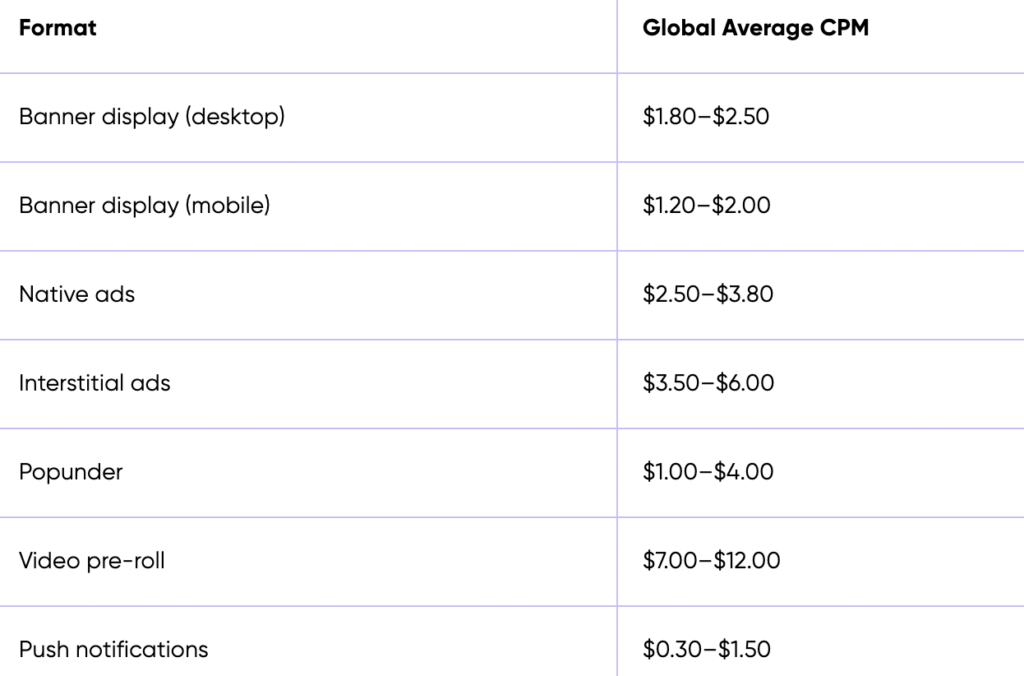
In 2026, typical global CPM benchmarks include:
4. Focus on high-CPM GEO traffic
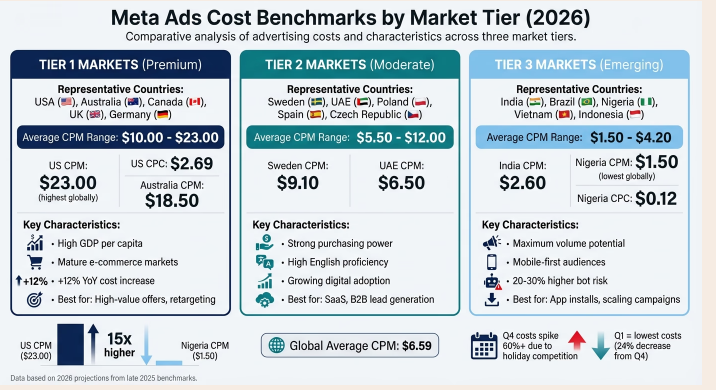
Traffic location has a direct impact on advertiser bids. Tier-1 markets (the U.S., Canada, UK, Germany, Australia etc.) typically generate significantly higher CPMs than emerging markets.
Publishers targeting these regions often experience higher ad demand from exchanges and fintech companies seeking regulated markets.
5. Improve viewability and placement
Ad placement and visibility directly influence revenue. Common high‑performing placements include top‑of‑article banners (just below the title/intro), mid‑content ad units embedded within long guides, sticky sidebar units that remain visible as readers scroll, and end‑of‑article placements that engage users who finish your content. These positions are recommended in recent monetization guides like Sprediom because they consistently deliver higher viewability and engagement across desktop and mobile traffic.
6. Combine ads with affiliate monetization
Many successful crypto publishers combine advertising with affiliate partnerships. Exchanges often offer commission programs that reward publishers when users register or start trading. Platforms such as Binance and Coinbase run affiliate programs that can generate significant revenue alongside display ads.
7. Continuously test and optimize
Optimization is an ongoing process. Publishers should track key performance metrics such as CPM, CTR, fill rate, and revenue per thousand visitors (RPM).
Global advertising spend is projected to exceed $1 trillion in 2026. This highlights growing competition for high-value audiences and makes performance optimization increasingly crucial for publishers.
Direct deals vs crypto ad networks
Both models belong in a mature publisher’s stack. The right balance depends largely on audience quality and traffic scale, along with the resources available to manage campaigns.
| Factor | Direct deals | Crypto ad networks |
| Revenue | High per placement, premium CPMs | Moderate per impression, scalable total revenue |
| Scalability | Limited, depends on sales capacity | Highly scalable, instant access to multiple advertisers |
| Operational effort | High, negotiate, and manage campaigns | Low, mostly automated after setup |
| Control | Full control over advertisers & placements | Medium, network chooses advertisers, some targeting options |
| Sales complexity | Complex, long lead times | Simple, plug-and-play |
| Revenue stability | Variable, dependent on deals | Steady, consistent payouts |
Many publishers combine both approaches: premium placements are often sold through direct deals, while crypto ad networks monetize remaining inventory and ensure consistent revenue.
Compliance and GEO restrictions
Compliance in 2026 is a direct revenue variable rather than a legal formality.
Jurisdictions operate under different rules. The EU permits crypto exchange advertising under MiCA. UK FCA guidelines require mandatory risk warnings and a 24-hour cooling-off period on promotional materials. Serving the wrong creative to the wrong user can reduce your Quality Score with ad networks or trigger payout blocks.
Advertisers generally focus on Tier‑1 markets like the United States, United Kingdom, and Germany, which offer higher CPMs and regulated environments, while traffic from restricted regions such as China or Bangladesh may be blocked, reducing revenue.
By targeting only allowed regions and ensuring compliance, publishers can maximize CPMs, maintain stable revenue, and avoid penalties. Exchanges like Binance and Coinbase restrict campaigns to regulated markets. GEO filters help publishers remain eligible for these campaigns and build trust with advertisers.
Getting maximum crypto ad revenue in 2026
Crypto advertising in 2026 presents publishers with a high-value monetization opportunity, but results depend on the strategy behind the setup and the ability to operate within regulatory requirements. Publishers who focus on readers who are really interested in crypto, like those who use exchanges or DeFi, can get paid more for their ads and also give their readers more relevant content. This is because these readers are more likely to be interested in crypto products, so advertisers are willing to pay more to reach them.
Implementing GEO-aware campaigns and adhering to regional regulations ensures ad inventory eligibility for top advertisers and penalty avoidance. Combining direct deals with specialized crypto ad networks allows publishers to balance high per-placement revenue with scalable, consistent payouts. Continuous testing of ad formats and placement strategy optimizes campaign performance in a competitive market.
Want to monetise your traffic and start earning from crypto advertisers? Become a publisher on Bitmedia today – reach premium crypto demand, plug into wallet‑aware campaigns, and turn your audience into a stable revenue stream. Start here to get set up and start earning.

Related Posts