







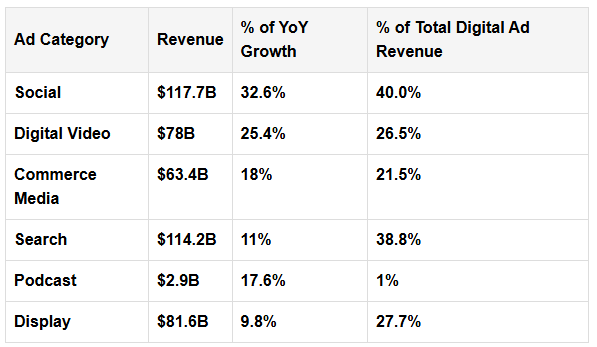
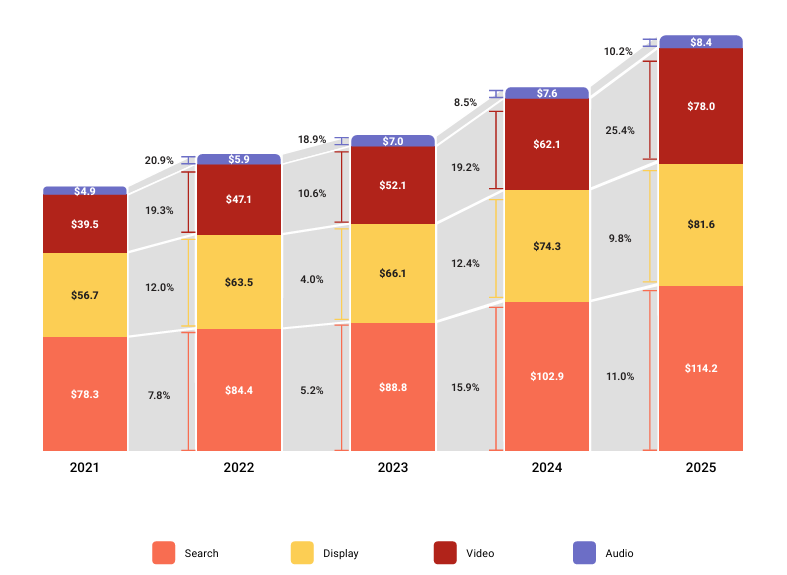
Banner advertising still accounts for a substantial share of digital ad spending. According to IAB’s report, in the U.S., display advertising generated $81.6 billion in 2025, up 9.8% year over year and representing 27.7% of total digital ad revenue. Video is growing faster, but display remains a major part of the market.
A web banner can reach users while they are reading, researching, comparing products, or following market news. It can also be adapted for different devices and audiences. The more useful question is which campaigns work under which conditions.
Visual appeal alone says little about campaign performance. Performance should be judged against the campaign objective: clicks, registrations, app installs, deposits, sales, or ROAS. Viewability is also important. Google defines a viewable display impression as at least 50% of the ad being visible for one continuous second.
The performance of creative also depends on the audience and media environment. A simple banner shown to a high-intent audience can outperform a much more complex ad presented to irrelevant traffic.
Binance puts audience intent at the center of its banner strategy
Crypto is a useful example because audience intent varies considerably. Someone researching Bitcoin may still be evaluating exchanges, while an active trader may already have a specific platform in mind.
A publicly documented Binance campaign ran across Southeast Asia, Eastern Europe, and Latin America, delivering more than 2 million impressions and a 1.09% blended CTR. The campaign reported 4,600 new traders and attributed $494,000 in trading volume during the campaign window.
The campaign didn’t treat every crypto user as one audience. Prospecting and retargeting were separated, while the targeting strategy focused on crypto-active retail investors. The ads also ran in crypto-native publisher environments as a way to provide contextual relevance to the creatives.
Five banner variants were run against the same audience segment so different messaging could be compared without changing the targeting conditions. Retargeting generated 41% of verified conversions from 19% of total spend.
Obmify tests banner formats for a local crypto audience


Obmify worked with Bitmedia to increase brand awareness and website traffic in Ukraine. The campaign used localized banner creatives and tested different banner sizes and text combinations to identify stronger-performing versions. The best-performing formats included 300×250, 320×100, 468×60, and 160×600.
Over the month-long campaign, Obmify generated 670,995 impressions, 3,800 new users, and 179 conversions. The campaign recorded a $0.70 CPM, $0.36 CPC, and $12.69 CPA, with total campaign spend reaching $3,491.
The campaign also used localized messaging for the Ukrainian market, while performance data helped determine which banner formats deserved more exposure in later stages.
Jackbit’s iGaming campaign: building awareness before scaling conversions
iGaming campaigns demonstrate why performance metrics must be interpreted in context.
Jackbit Casino ran an 18-day display campaign in Germany, the UK, and the U.S. It generated 660,000+ impressions, 1,806 clicks, a 0.27% CTR, and a €7.62 CPM.
Jackbit’s strategy in iGaming banner advertising shows the value of systematic testing and incremental growth rather than expecting immediate results. Jackbit started by investing a small portion of its budget to test markets and creatives before going all in. CTRs were lower during the first stage, which focused on premium placements designed to build visibility and trust. The goal was market validation and awareness. With performance validated, Jackbit moved to stronger CTAs and scaled up its activity across its best-performing markets.
Visa puts travel context behind its banner campaign
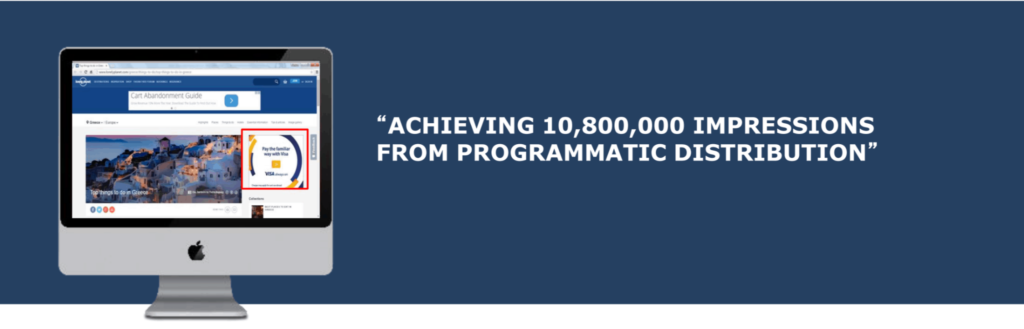
Visa used static display banners to strengthen brand recognition among international travelers. The campaign targeted affluent audiences in 80 global markets and ran banners on premium travel and financial news sites during peak travel times.
The creative positioned Visa as a known payment option for international travel. The banners were simple and brand-led, with a CTA pointing interested users to a landing page.
The awareness campaign generated 10.8 million impressions, a 0.33% CTR with 83% viewability.
Slack: Using customer use cases in SaaS banner ads
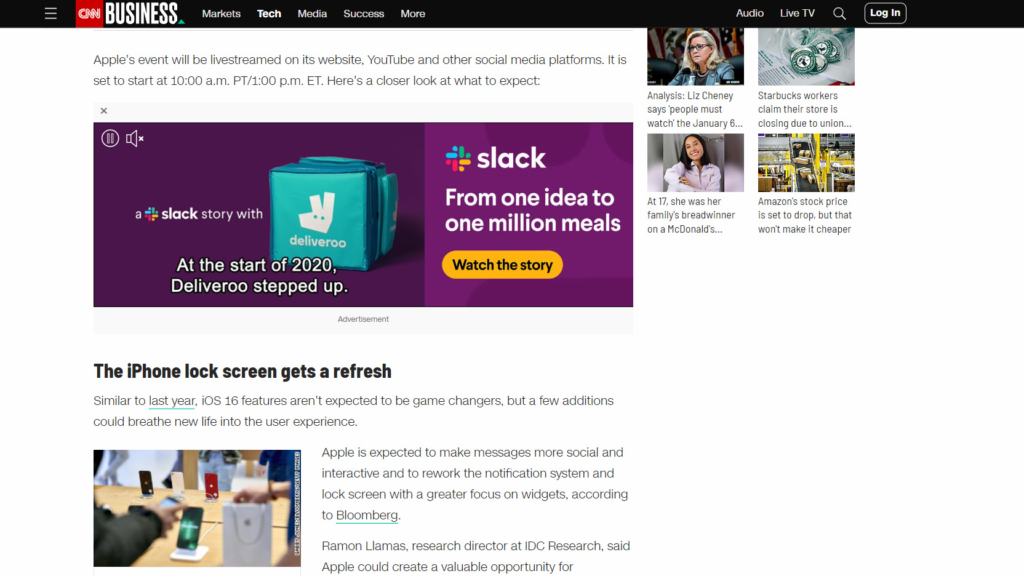
Slack wanted to increase awareness and consideration among UK C-suite executives and business decision-makers who could benefit from its workplace messaging platform. To reach that audience, Slack designed a series of static banner ads focused on specific customer use cases. The banners ran on CNN.com using audience-based and contextual targeting.
The banners provided decision-makers with concrete examples of how they could use Slack within their organizations. Without aggressively pushing a sales message, the CTA supported the campaign’s consideration objective.
The campaign generated 5 million digital impressions and a 0.74% CTR.
Banner ad design and the elements that affect performance
High-performing static banners rarely depend on visual complexity. The strongest designs create a clear visual hierarchy: the viewer can identify the brand and find the CTA without having to decode the layout. Google recommends keeping display creatives simple, product-focused, and easy to understand, particularly across different ad sizes.
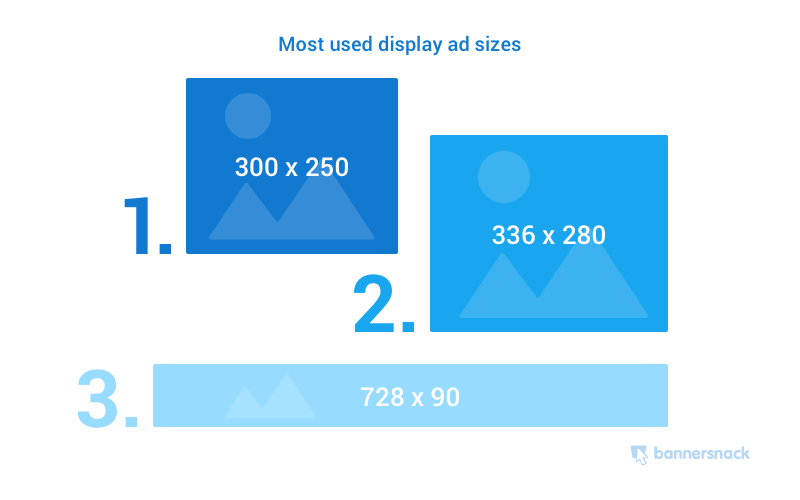
In a small banner, hierarchy and typography are inseparable. A headline that fits comfortably in a 728×90 leaderboard may be too long for a 320×50 mobile banner. Smaller placements often need shorter copy and a tighter layout. Google provides common display sizes such as 300×250, 336×280, 728×90, 300×600, and 320×50.
The Binance, Visa, and Slack examples approach brand recognition differently, but all three keep the advertiser identifiable without allowing the logo to compete with the main proposition. In crowded categories like crypto or SaaS, a banner has to quickly connect the message to the advertiser. The logo and visual identity should be recognizable without overshadowing the proposition.
Animation is useful as a comparison because static banners have one clear limitation: repeated exposure can reduce attention. Research published in Computers in Human Behavior has found that static banners can experience attention wear-out with repeated exposure, while animated ads may retain attention longer.
Mobile optimization and format choice need to shape the design from the beginning. A banner that remains clear across placements has a better chance of delivering its message wherever the campaign runs.
Audience intent changes how a banner performs
The same banner can perform differently across audience segments, largely because users arrive with different levels of intent. A first-time visitor may need an educational message, while someone who has already been to a pricing page may respond better to a specific product benefit or incentive. The creative should build on what the audience already knows.
Context matters as well. A crypto banner shown alongside market news enters an environment where the subject is already relevant. The same creative on an unrelated website may need to work much harder to capture attention. Research published in PubMed has found that consistency between an advertisement and surrounding content can influence attention and memory.
The message can change with that intent. Educational copy may work better for new audiences, while users familiar with the product may need a specific benefit or trust signal. Incentives tend to make more sense later in the funnel when the user already gets what the offer is.
The correct combination is seldom obvious in the first creative. Advertisers can A/B test headlines, offers, visuals, or CTAs and discover which version is most effective for the specific audience and placement. The Binance campaign, for example, tested several banner variants before reallocating budget to the stronger-performing combinations.
How ad placement affects banner ad performance
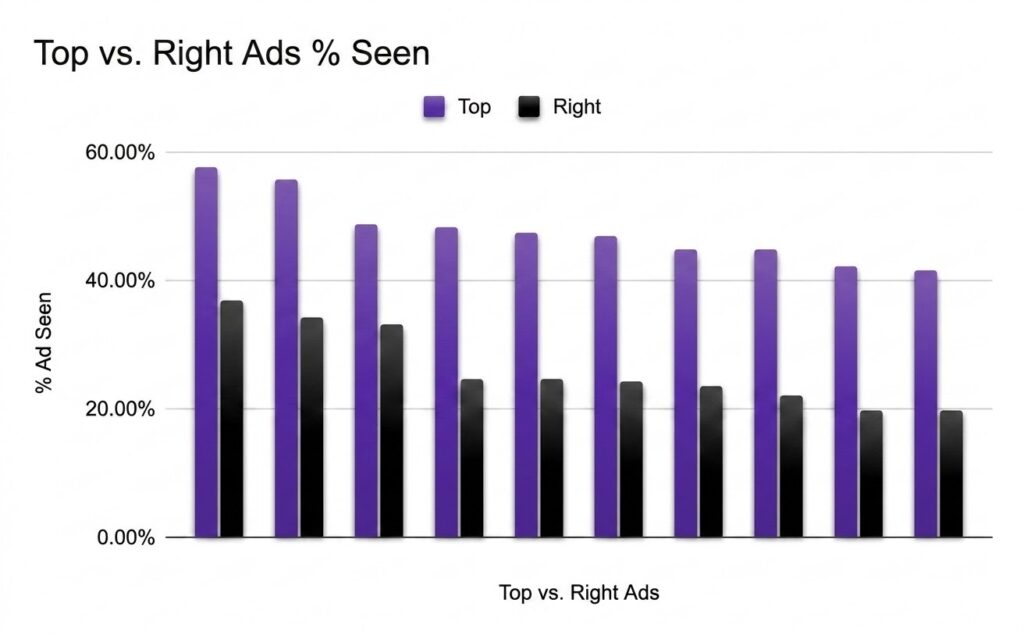
Placement can change performance even when the creative stays the same. Publisher relevance, page position, and device affect both visibility and context.
A crypto banner placed on a cryptocurrency publication reaches an audience with a different level of interest than the same creative on a general-interest website. Positioning on the page is also important. Google notes that viewability varies by position, with some placements near the top of the page performing differently from ads that users only encounter after scrolling.
The device adds another variable. A desktop leaderboard can support more horizontal copy, while a 320×50 mobile banner requires a much tighter composition. Campaign reporting should break results down by placement and device instead of using one overall CTR.
For advertisers, changing the banner is not always the first solution when performance falls. The problem may be the environment in which the banner is being seen.
Turning these lessons into a better Bitmedia campaign
The same variables can be tested in Bitmedia campaigns. An advertiser can vary GEO, language, device, operating system, and audience targeting, then compare how the same static creative performs across those segments.
Creative testing can follow the same approach. Advertisers can upload multiple static image ads in JPG or PNG format, compare their performance across audiences and placements, and test different creative variations within the same campaign. Bitmedia also supports video advertising in MP4 format, which can be useful when motion adds information that a static creative cannot communicate as effectively.
Creative is only one variable. Placement and frequency can also affect the result. Bitmedia enables advertisers to control how often users see an ad by setting frequency caps and choosing between regular or sticky banner placements.

Related Posts