





The UEFA Champions League and FIFA World Cup 2026 draw billions of viewers. Sports advertising opportunities exist for brands in crypto marketing, fintech advertising, and beyond. These events get people all over the world excited. For example, the Champions League finals alone draw 145 million+ viewers, with full seasons reaching hundreds of millions globally, according to UEFA reports. The expanded 48-team FIFA World Cup 2026 is expected to break records with more than 5 billion viewers in the U.S., Canada, and Mexico, based on projections from World Cup Pro. For marketers, this is prime time for ad campaigns that tie into fan passion, driving conversions in verticals like Web3, SaaS marketing strategies, and iGaming through timely, relevant promotions.
Understanding audience behavior during major sports events
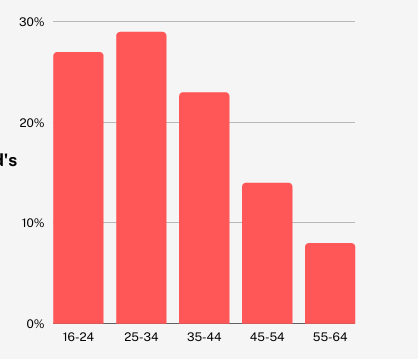
The major sports events divide audiences into hardcore fans, casual viewers, and cultural participants, each with their own behaviors that smart advertisers use to reach them more effectively. Hardcore fans – 57% male, largest groups aged 25-34 (29%) and 16-24 (27%), dive into stats and analysis on apps like betting platforms, while cultural fans, including more women and Gen Z, chase social buzz around halftime shows or national pride. According to research from Regen Sports, traffic hits record highs, like 34 million users on Flashscore during Champions League match days, and 83% of Gen Z are using second screens on TikTok and Twitch.
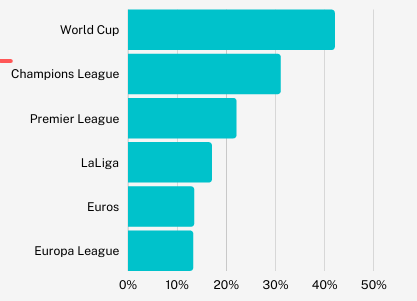
Engagement peaks pre-game (hype-building shares), in-game (live polls), and post-match (debates), while content shifts to streaming and short clips. After the event, people often watch highlights and analysis on platforms like YouTube. Advertisers use these patterns by targeting intent signals, like betting app opens during matches for crypto marketing drops or fintech trading prompts, which raises click-through rates by matching emotional highs.
Planning campaigns for high-demand periods
For Champions League seasons or FIFA World Cup 2026 qualifiers, you need to plan and focus on modular creative assets and phased scheduling. Christopher Hogg, CRO at Lotame, warns:
“Even audiences who aren’t interested in the World Cup will be defined, and targeted, through their disinterest. It will be the largest sporting and indeed cultural event in history, and will affect every media planning decision in its wake.”
Use AI tools to quickly change colors and tones to make variant libraries with team logos for rivalries like Real Madrid vs. Barcelona.
Schedule campaigns in waves: pre-event awareness via social, live urgency on CTV/mobile, post-match retargeting, and prioritize budgets toward peak moments like semifinals while reserving contingency funds for surprises. Timing to engagement spikes like halftime maximizes impact for popular ad campaigns.
Vertical-specific strategies
Each vertical requires a tailored approach to fully capitalize on event-driven engagement, as audience intent and conversion triggers vary across industries.
Campaigns in regulated verticals need pre-approval to avoid shutdowns during Champions League or World Cup peaks. Gaming/iGaming ads get rejected without gambling licenses, Meta takes 7-14 days to approve, and Google takes 1-2 days. Crypto/NFT promotions require Google financial certification, or they’ll never launch. Fintech/trading apps must show regulatory compliance docs upfront.
Web3 & crypto
Link NFT drops or token launches to important events, like when Champions League goal scorers mint unique collectibles or when FIFA World Cup 2026 bracket predictions get airdrops. Crypto.com’s past stadium naming rights show how ads aimed at wallets during games can get people to sign up for Web3 games. For example, phrases like “Own the Goal NFT” turn fans’ loyalty into on-chain action. Transparency and clear value are the keys to success in this area. Users are more likely to get involved when they can easily understand the rewards and mechanics.
Finance & fintech
Promote trading apps during times of high World Cup trading activity, or stadium-linked cards for easy payments. eToro-style multi-club deals increase the reach of fintech ads, and geo-fencing fan zones make it easy for sports fans who are interested in finance to download apps right away. Real-time relevance works best during events, especially when making financial decisions is framed in a way that is familiar and sports-related.
SaaS & AI tools
Showcase analytics dashboards crunching real-time Champions League stats, player metrics, and team comparisons, or AI summarizing FIFA highlights using easy-to-understand queries. SaaS marketing strategies targeting marketers deliver massive engagement boosts, as seen with Bayern Munich’s 342% video view increase using WSC Sports.
Gaming & iGaming
Launch boosted odds or free bets that start at the same time as the game. World Cup TV ads drove a 16-33% increase in betting based on industry data cited by IGAMING TODAY. Over/unders are still popular for Champions League affiliate promotions, and real-time predictions drive high-frequency plays with in-play tools. Promotions that let people interact in real time, such as live betting and prediction games, do really well.
Mobile utility & earnings
Push rewards apps offering match-day coupons like JD Status QR scans at venues or Sport Rewards 50% off deals. Messaging that focuses on earning opportunities during matches, such as completing tasks during breaks or generating passive income while watching, resonates strongly with users. These campaigns perform best when onboarding is easy, and the value proposition is communicated clearly within seconds.
Creative and messaging tips for conversions
Urgency and contextual relevance define high-performing creatives during sports events. Ad copy should quickly show value, usually in the first few words, and use language that is specific to the event and time-sensitive. Messages that show real-time events or limited availability tend to get more people involved.
For mobile, use short, punchy copy that is tied to the event and has urgency verbs capped at one line. Visuals prioritize motion and should be designed for speed and impact. In places where people scroll quickly, short videos, strong contrasts, and things like timers or live indicators can help grab people’s attention. Platform-specific optimization is essential, particularly for TikTok and Instagram, where vertical formats dominate. Red Bull’s extreme sports clips prove single bold images outperform static text.
Interactive polls and quizzes drive engagement, while Digital Out-of-Home (DOOH) in sports bars during peak moments leads to social retargeting for long-term campaigns. When combined with clear and direct calls to action, these elements significantly improve conversion outcomes.
Traffic and targeting strategies
Modern ad campaigns during major events rely on a combination of contextual, cookieless, programmatic, and geo-targeted approaches. Contextual targeting ensures ads appear alongside relevant sports content and match user intent in real time. Cookieless strategies, including first-party data and cohort-based targeting, provide privacy-compliant ways to reach audiences while maintaining accuracy.
Programmatic advertising enables real-time optimization, allows advertisers to adjust bids and placements during peak engagement moments. This flexibility is particularly valuable during live matches, where audience behavior changes rapidly. Platforms such as Bitmedia operate within this ecosystem, offering automated ad placement and targeting based on factors like user behavior, content context, and geographic data. Geo-targeting adds another layer of precision by tailoring campaigns to specific regions, time zones, or fan bases and improves relevance and conversion potential.
When used together, these strategies make a complete targeting framework that works for both size and speed.
Monitoring and optimizing campaigns
Continuous monitoring is essential during high-demand events. Advertisers should track performance metrics such as engagement rates and traffic patterns in real time. This allows immediate adjustments and ensures budgets go to the most effective creatives and placements.
A/B testing remains a critical component of optimization. Testing variations in messaging and visuals can reveal what resonates most with the audience. When there are a lot of people at a live event, even small changes can make a big difference in how well things go.
Post-event analysis provides valuable insights for future campaigns. Understanding which time periods, audience segments, and creative formats delivered the best results helps refine strategies and improve long-term performance.
Driving ROI from Champions League & FIFA World Cup ads
Advertising during the UEFA Champions League and the FIFA World Cup 2026 offers unmatched reach and strong conversion potential. However, success depends on more than visibility. It requires a strong understanding of audience behavior, along with precise timing and well-adapted creatives.
By aligning campaigns with real-time moments, tailoring messaging to specific verticals, and continuously optimizing performance, advertisers can turn these global events into highly effective growth drivers. In a competitive landscape where attention is limited and demand is high, well-executed sports advertising campaigns can deliver measurable and scalable results beyond simple exposure.

Related Posts