






The FIFA World Cup has always been one of the biggest betting events on the planet. But the 2026 edition is something different. There are 48 teams and 104 games spread over three nations in this edition. And six billion people are expected to watch. Crypto is the fastest-growing payment method in online betting. As a result, the majority of sportsbooks are unprepared.
Crypto betting is quickly growing into a major source of income, and the World Cup is the perfect example of this.
The scale of World Cup betting
The numbers for 2026 are genuinely historic. H2 Gambling Capital projects a total legal handle of $60 billion globally. That is a 71% jump from the 2022 Qatar tournament, which itself set a record for sports betting market size. In the US alone, research firm Eilers & Krejcik estimates licensed sportsbooks will handle between $2.82 billion and $4.3 billion.
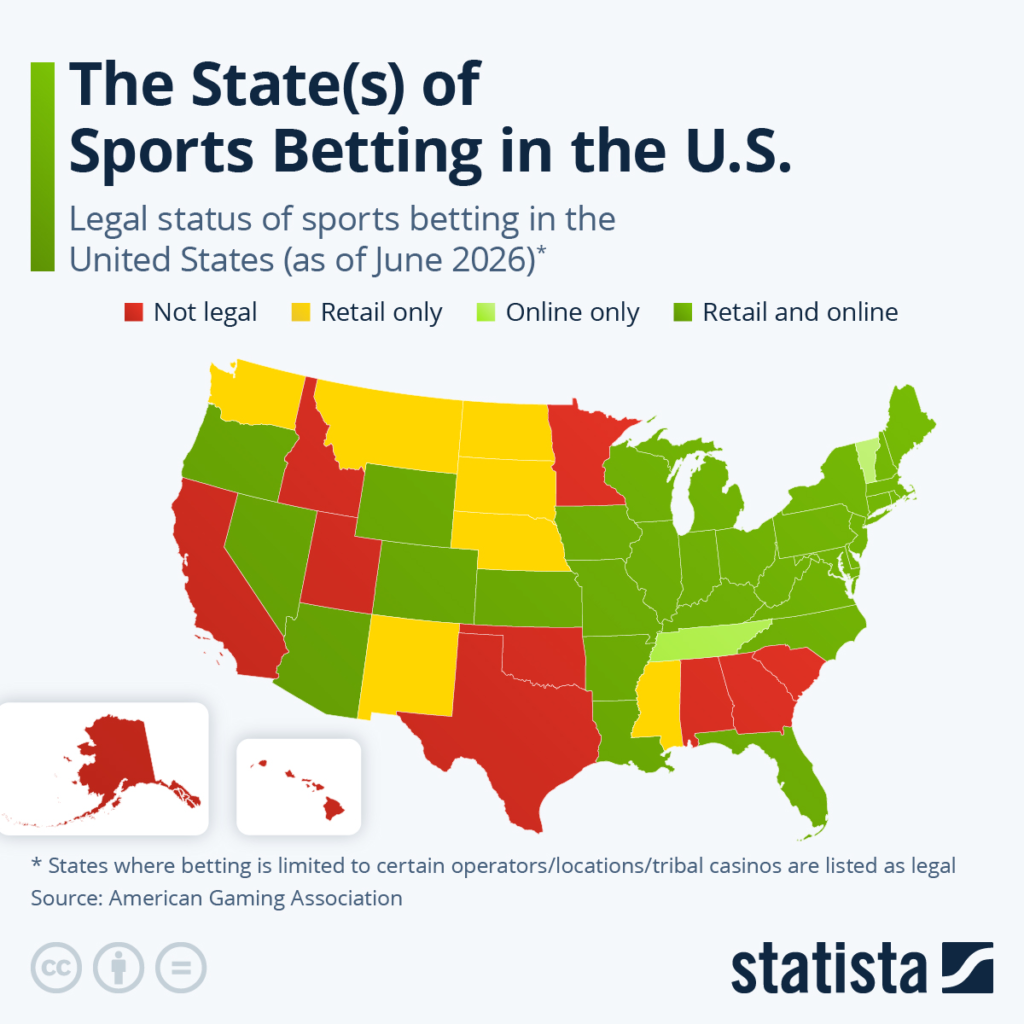
Legal sports betting now covers 39 US states, and out of those, exactly 30 states have active online and mobile sports betting apps. The expanded match count gives bettors more inventory across five weeks of action. And unlike Qatar, where most kickoffs landed at 5-11 a.m. Eastern, 2026 matches run during peak engagement hours for North American audiences.
The prediction market side is moving just as fast. Platforms like Kalshi and Polymarket saw combined World Cup volume surge from $2.2 billion to $4.8 billion within the first two days.
This is the baseline market, before crypto expansion becomes a factor.
Crypto’s growing share in betting transactions
The share of online wagers settled in crypto has grown faster than most traditional operators expected. By 2026, the crypto gambling sector is valued at over $65 billion, according to Companies History’s report. Stablecoins – primarily USDT and USDC, projected to handle over 70% of all crypto betting transactions.
This development changes the profile of the crypto bettor. Earlier crypto bettors accepted price exposure as a cost of doing business. Today, most transactions run on stablecoins, eliminating the volatility problem that kept casual players away.
Crypto bettors also behave differently from fiat players. Data from Yogonet shows that crypto users spend as much as 2.6x more per session than the average fiat player. The fastest-growing vertical in cryptocurrency gambling is sports betting. Cryptomaniacs expects it will account for more than 20% of all crypto gambling interest by 2026. Major global events like the World Cup are driving this growth.
Geographic opportunities for crypto betting
Crypto betting growth is unevenly distributed. Several regions show outsized opportunity.
LATAM
Latin America is one of the fastest-growing regions for online betting. Brazil alone has over 22 million active bettors and $7 billion in revenue by 2025. Cryptocurrencies function as practical payment tools here. Argentina has high inflation, which makes stablecoins a useful tool for getting by. Businesses in Brazil use them to bypass slow legacy cross-border banking rails.
Europe
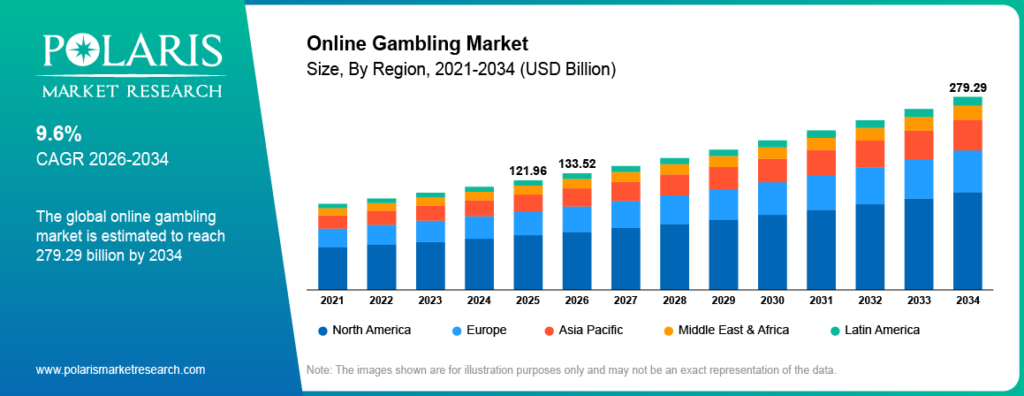
According to Polaris Market Research, Europe holds over 49.80% of global online gambling revenue.
The EU’s MiCA regulation provides a harmonized licensing framework for crypto-asset services across all member states, giving stablecoin and exchange operators a single authorization route for the crypto side of their business. However, MiCA governs crypto-assets and crypto-asset service providers, it does not grant gambling permissions. Gambling licensing in the EU remains a national competency according to the European Commission Framework, so any crypto betting platform must still hold a separate, valid gambling license in each market where it operates, in addition to any MiCA authorization it holds for its crypto-asset services. Younger bettors are increasingly adopting crypto in countries like Germany, the Netherlands, France, and Spain.
SEA
Southeast Asian nations are heavily dependent on digital assets to meet local consumer demand. Patent PC notes India has more than 90 million crypto users, the highest number in the world. Crypto betting is filling a need where traditional banking channels are slow or limited. In this case, digital assets fill a crucial operational gap and enable casual players to interact with global platforms securely without having to deal with the drawn-out processing times of regional commercial banks.
MENA
The Middle East and Africa are adopting stablecoins at a rapid rate. Nigeria and Kenya show fast-growing crypto betting activity, driven by young, tech-literate populations and currencies under inflation pressure. Traditional advertising channels have not served these markets well, so crypto-native platforms are the reliable gateway to this audience.
Regulatory landscape favoring crypto betting
The regulatory landscape for digital asset gaming was tricky to navigate. Instead of viewing on-chain transactions as a threat, regulators are beginning to see them as a solution. When crypto activity is visible and can be tracked, it helps get rid of black markets and makes tax collection more reliable.
- The United States: The U.S. has taken a forward-looking approach and moved to clear frameworks that officially allow event contract exchanges and prediction markets.
- The European Union: MiCA gives licensed crypto-asset service providers a harmonized set of rules for operating across EU member states, which makes it easier to build banking relationships for the crypto-asset side of a betting business. Gambling authorization itself is still issued and regulated separately by each member state, so platforms need both a gambling license per jurisdiction and, where relevant, MiCA compliance for their crypto-asset activities.
- Global Hubs: Authorities such as the UK Gambling Commission are actively considering how to bring stablecoins into the fold safely. The focus is on meeting consumer protection and AML rules.
Companies still rush to Malta and Curaçao for fast gambling licenses. However, crypto platforms are gaining massive regulatory respect by using “Provably Fair” code that proves their games aren’t rigged.
Why World Cup 2026 will be the biggest crypto betting event ever
The tournament itself is the largest in history. At 104 matches, there is nearly 63% more betting inventory than in the 64-match 2022 edition – more live betting markets and more daily engagement.
We now have institutional legitimacy. Kraken was named the Official Crypto Exchange Supporter of the FIFA World Cup 2026. Chainlink is providing oracle infrastructure for prediction market settlement. Avalanche manages FIFA’s digital collectibles platform. The top-tier sports world and the cryptocurrency infrastructure come together.
And prediction market volume is already breaking records. Kalshi crossed $100 billion in lifetime notional volume during the tournament’s opening weeks. It also recorded its first-ever billion-dollar trading days. These platforms accept stablecoins and Bitcoin, which means every transaction represents a crypto-native bettor actively in the market.
The record prediction market, mainstream crypto integration, and increased tournament scale all lead to the same conclusion. 2026 is the single largest crypto betting moment in history.
Why most advertisers are missing this audience
Despite this massive flow of capital, a large percentage of traditional sportsbooks and mainstream brands are missing this high-value audience. Traditional marketing channels have structural flaws that cause the problem:
- Platform bans and regulatory red tape: Google Ads and Meta enforce heavily restrictive, region-specific certification processes for both digital assets and iGaming. Ad approval can take up to two weeks. Now the match is over, and the real-time live match spike is gone.
- Audience fragmentation: Crypto-native bettors and high-frequency players are not watching mainstream media or TV commercials. They exist purely in the digital realm, namely Web3 communities, forums, telegram channels and Discord servers.
- Ad format misalignment: Standard display banners often cause immediate banner blindness. High-intent Web3 users demand contextual, integrated ad placements that respect their user experience.
Bitmedia as the bridge to crypto bettors
Bitmedia connects sportsbooks directly to the audience that mainstream ad networks cannot reach. Since 2014, the platform has worked with crypto casinos and iGaming operators who need the kind of precise targeting that general programmatic networks do not offer.
The practical advantage is inventory and specificity. Bitmedia works with over 7,000 verified crypto-native publisher sites. These are the exchanges and news platforms where crypto bettors actually spend time. Advertisers can filter campaigns by location and device type, or target Web3 audiences directly by choosing relevant interests like sports betting. This is direct placement against an audience that is already active on Bitcoin betting sites, already browsing crypto sports betting content.
Campaign formats are matched to the environment, too. HTML5 units and native formats with sticky placements work in crypto contexts rather than against them. Bitmedia also supports Web3 wallet connections on dedicated landing pages. Users can register and deposit in a single click. Campaigns are optimized for mobile and use real-time bidding. Sportsbooks can scale up as match traffic peaks.
Sportsbooks looking to reach crypto bettors during World Cup 2026 can launch their first campaign through Bitmedia today.
Launch Your Campaign!The early movers will define this market
The World Cup 2026 is setting new records across all categories. Legal handle is projected at $60 billion. Prediction market volumes are already at historic highs. A crypto gambling sector valued at over $65 billion is now seeing its fastest growth in sports betting. The audience is large, eager, high-intent, and prepared to spend.
What is missing is the advertising infrastructure to reach them at scale. Crypto sports betting is a primary channel for sportsbook growth, and this World Cup is the moment to capitalize.

Related Posts